
Most of what keeps a vacation rental running well isn't dramatic. It's small, boring, and invisible until it isn't. A hinge that slowly loosens over a season of guest use. A bracket that rusts behind a painted rail. A dryer vent that fills half a millimeter at a time until one day it can't breathe. The work of PROactive maintenance is catching those quiet shifts before they become loud ones.
This field report covers one visit to a three-story home on the 30A corridor. The home is part of a vacation rental portfolio, with back-to-back guest turnovers and the kind of year-round occupancy that accelerates everything. Two services happened on this visit — a trouble call response and a scheduled PROactive monthly inspection. We'll walk through both.
The trouble call
The homeowner had identified two specific issues that needed attention: several interior doors had worked themselves out of square, and the exterior stair handrail had developed noticeable movement under load. For a rental property, both are the kind of issue that goes from "mildly annoying" to "guest complaint" to "one-star review" faster than owners expect.
Door hinges
Eight hinges across multiple interior doors had loosened or deformed. In some cases the hinge plates had pulled against the wood; in others the pin tolerances had shifted enough that doors no longer swung or latched normally. We repaired all eight and verified normal operation on every door before moving on.
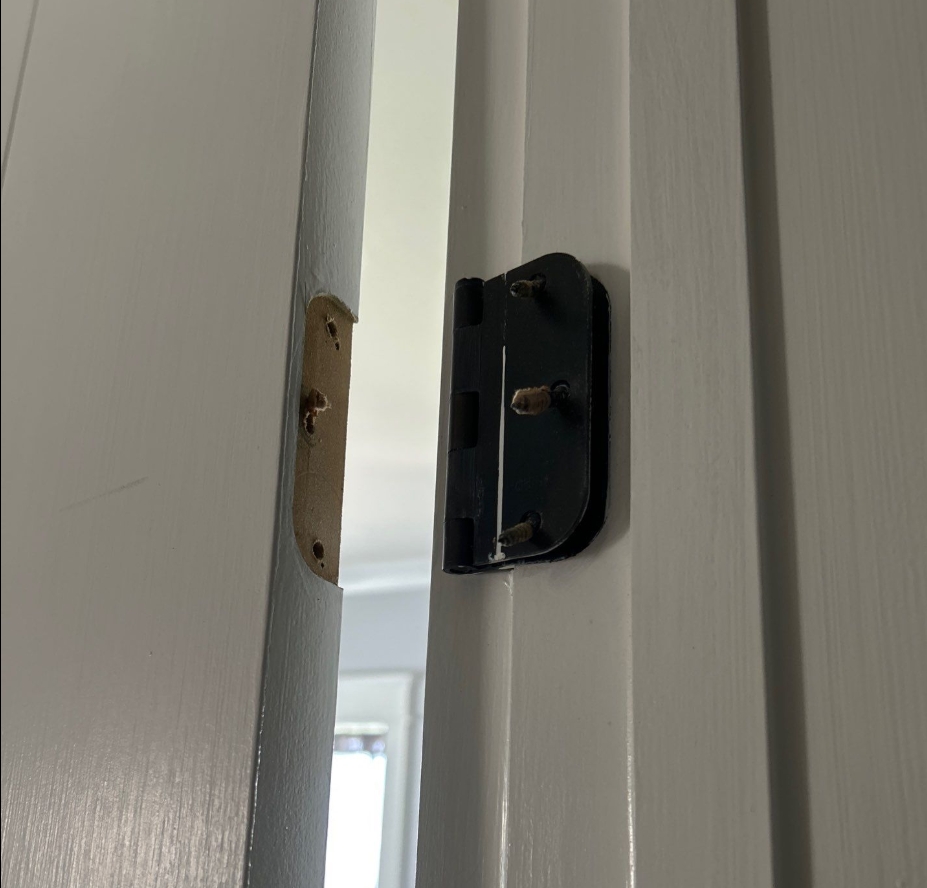 Before
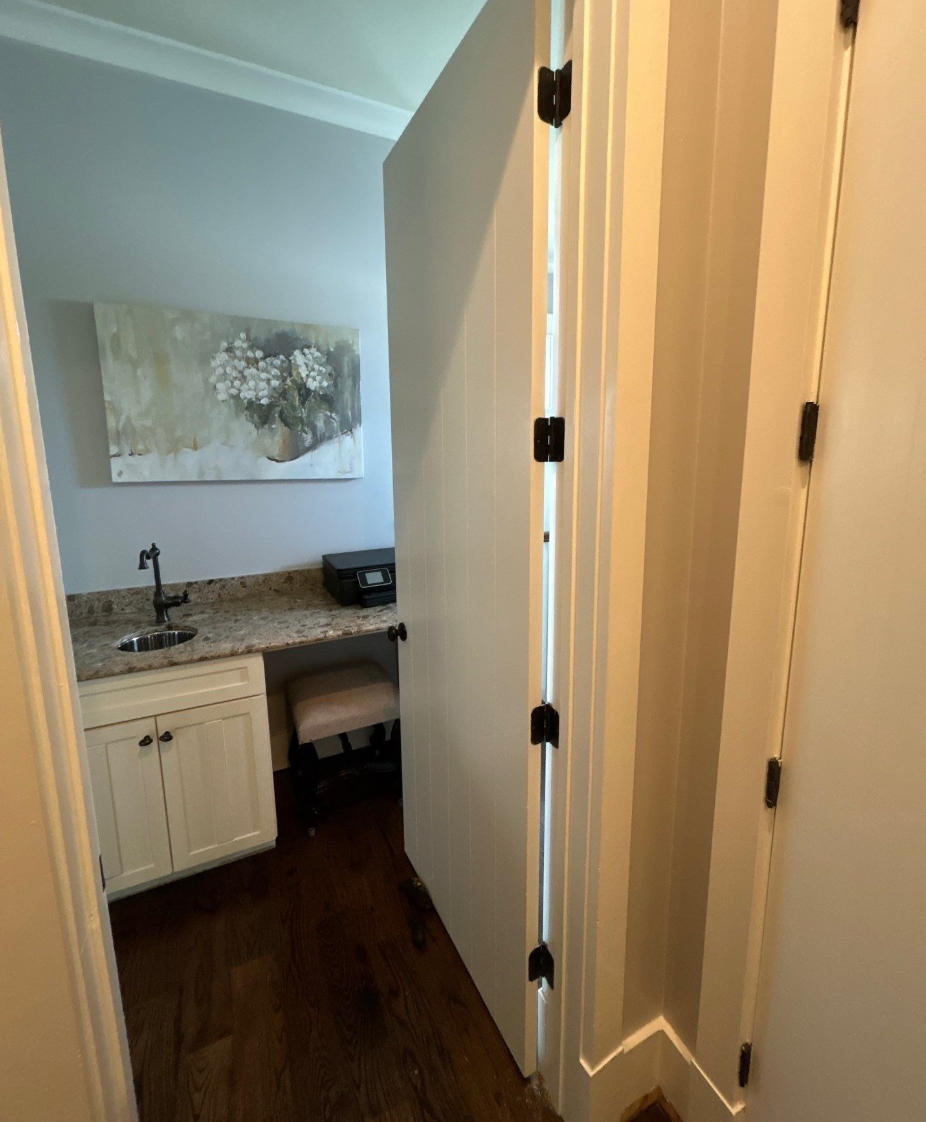 After
After
Exterior handrail
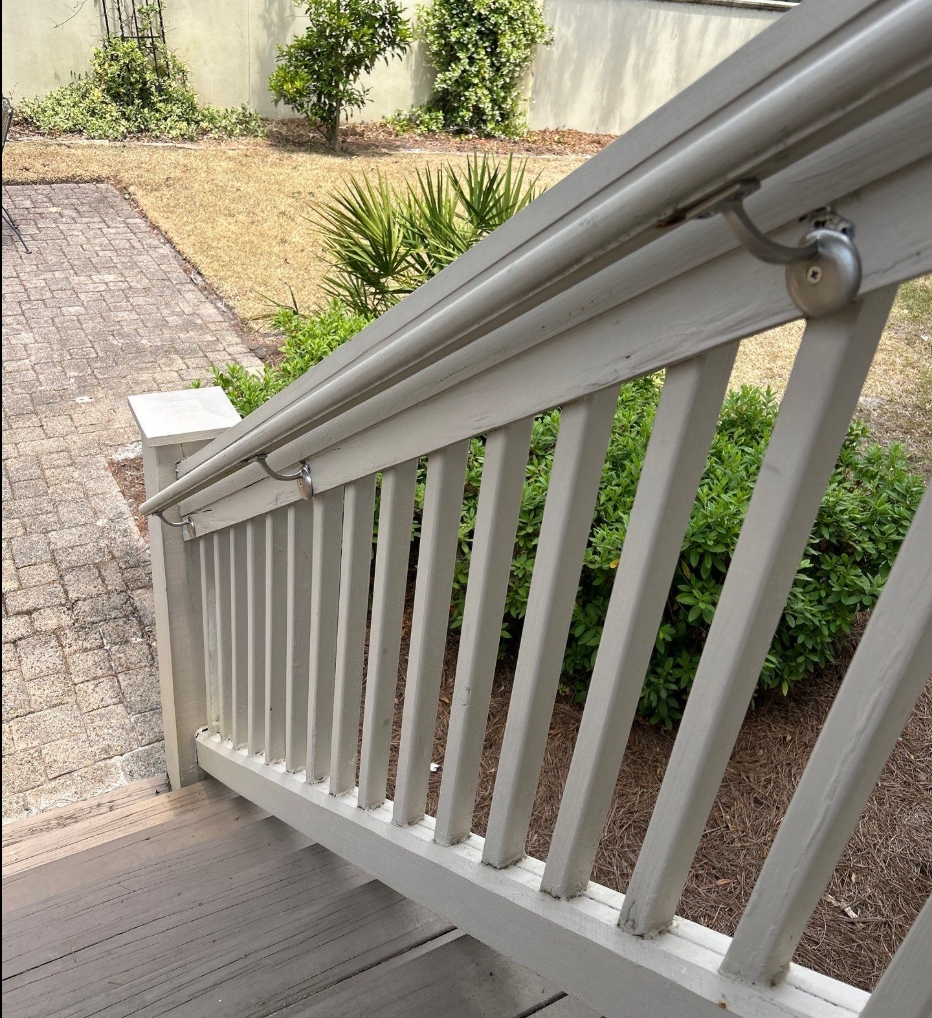
The handrail was the more important of the two items. Three of four mounting brackets were compromised, with visible hardware failure and movement when weight was applied. On a three-story elevation, a handrail that can't take weight reliably isn't a minor issue — it's a safety issue.
We pulled the failing hardware, replaced three brackets with new stainless components, and verified structural strength under load. Total materials: $17.88. Total labor: one hour. Handrail restored to working condition, with the caveat noted below.
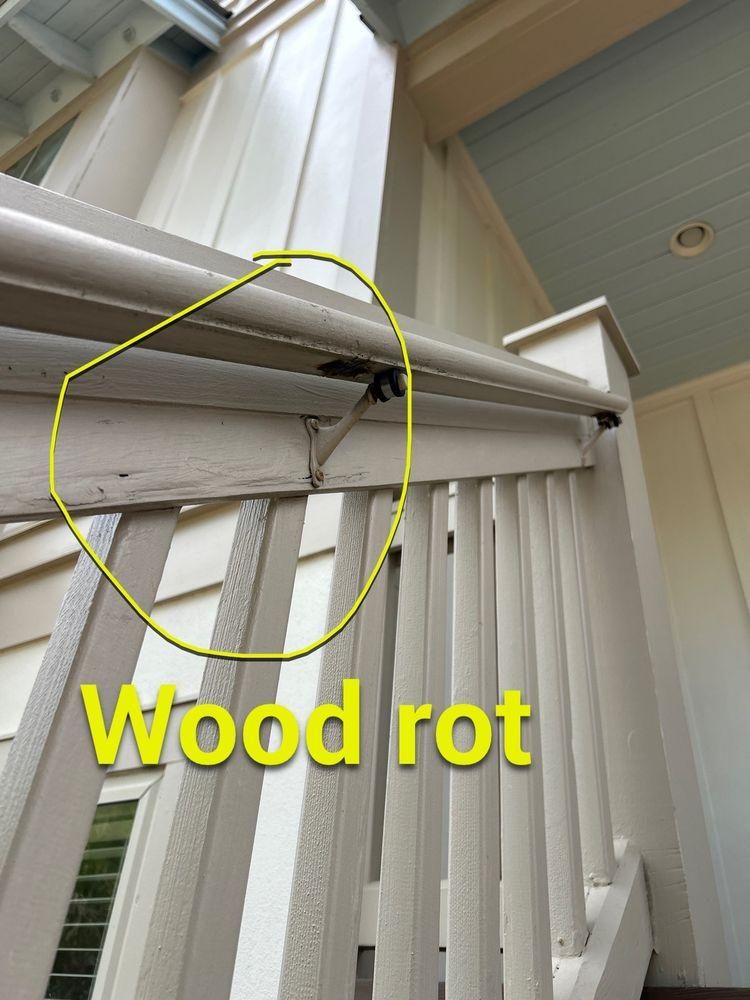
During the hardware replacement, we identified wood rot at the handrail-to-post connection — an important finding that gets documented under the PROactive flagged items below. The hardware holds for now; the wood behind it will need attention before next season.
The PROactive inspection
The PROactive monthly inspection is a separately scheduled service. It covers 145 checkpoints across six zones for this particular home — every bedroom, bathroom, mechanical closet, exterior surface, and system component gets walked, tested, and photographed on a structured pattern each month. The scoring works like this: every checkpoint either passes, gets resolved on-site, or gets flagged with a recommendation.
This month's inspection scored 145 of 145 (100%) on completion — every checkpoint was walked. Within that, four items were resolved on-site at no added cost (that's the value of having a tech with hands and tools already in the building), and eight items were flagged with photos and routed into the owner's action list.
Here's the value in one sentence: four small issues quietly disappeared, and eight larger issues became visible instead of invisible. That's what systematic attention actually buys a homeowner.
Resolved on-site
Handled during the visit, no additional chargeSecond-floor stairwell lightbulb
Burned-out bulb replaced. Full lighting restored.
Garbage disposal odor
Cleaned and treated with cleaning tablet. Odor eliminated.
Guest bath sink drain plunger
Detached stopper reattached. Normal function restored.
Master bath sink drain plunger
Detached stopper reattached. Normal function restored.
Flagged for awareness
Documented with photos, routed for owner decisionDryer vent fully obstructed with lint
Fire hazard. Causes extended dry cycles, excess heat, and accelerated dryer wear. Cleanout recommended promptly.
Handrail & stair assembly wood rot
Structurally sound for the season. Full wood replacement and repaint recommended by end of year.
AC surround boards fallen and rotting
Cosmetic and curb-appeal impact. Reattach or replace slats to restore clean presentation.
Exterior front lighting not operating
Bulbs verified good. Switch location could not be identified during visit. Further investigation needed.
Garbage disposal bearings worn
Functional but noisy with heavy vibration. Replacement recommended in near term.
Range: broken knob and loose enamel
Rear burner knob broken, bottom metal enamel separating. Parts-level fix.
Refrigerator water filter indicator active
Filter replacement due. Standard scheduled maintenance interval.
Third-floor bath: shower lights, diverter, and ceiling mildew
Overhead can lights not working, shower diverter issue, mildew in master toilet room ceiling. Multiple small items routed for follow-up.
The flagged items, photographed
Three of the flagged items deserve a closer look, because they illustrate what systematic monthly attention actually catches.
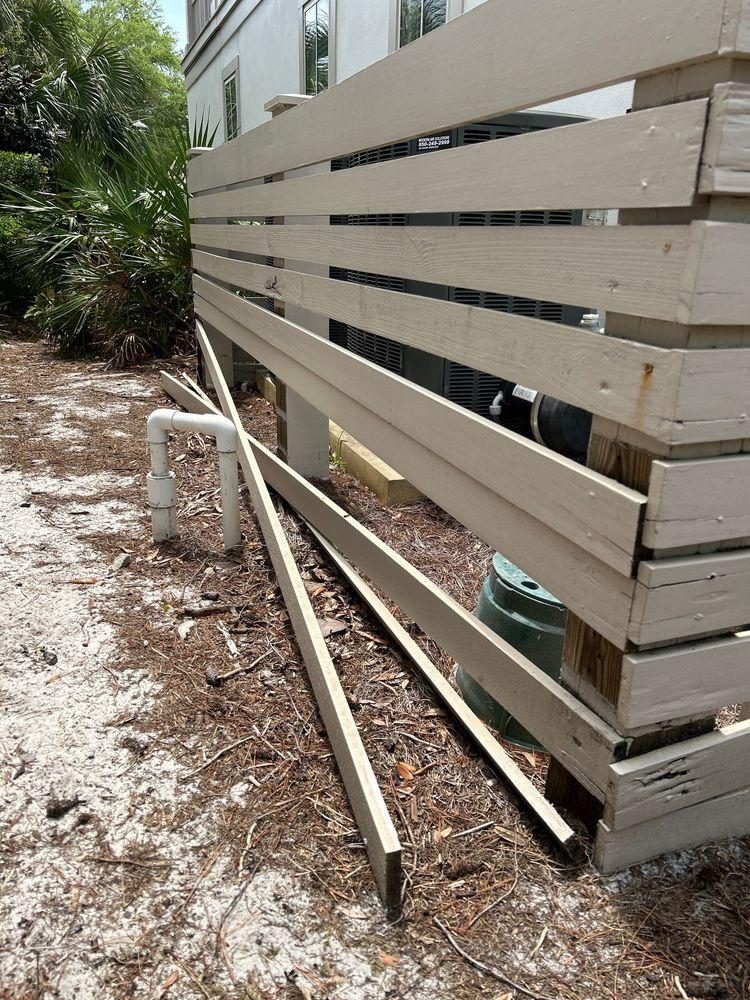
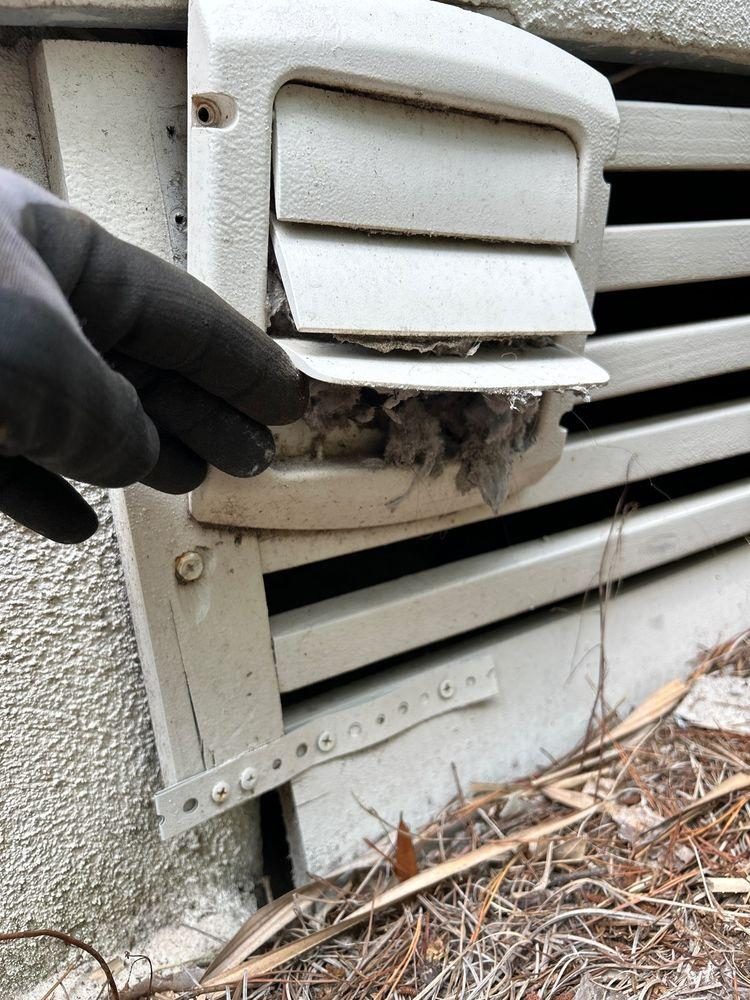
On the dryer vent specifically: clogged dryer vents are a leading cause of residential fires in the United States. Beyond the fire risk, a blocked vent causes longer dry cycles, excess heat that shortens the dryer's service life, and higher energy bills. For a rental running laundry daily between turnovers, the math is stark — a short cleanout prevents a premature dryer replacement, and possibly far worse.
The value of PROactive isn't heroic catches. It's consistent attention. Four issues quietly resolved and eight larger ones surfaced — that's one month on one property. Multiply that by twelve.
— TRUST Home & Business, Field NotesWhy this model works for rental properties
Vacation rentals on 30A operate in one of the harshest maintenance environments in the country. Salt air, humidity, sun, wind, and daily guest use combine to accelerate wear in ways that primary residences rarely experience. Add the fact that most owners don't live locally and can't "just pop by to check," and you have the exact conditions where small issues compound into expensive ones.
The PROactive program is built around three ideas:
Consistency. Same technician, same property, every month. Over time, the tech develops a mental model of the home — what's normal, what's changing, what's moving in a direction that will need attention in three months. That pattern recognition is impossible to replicate with rotating vendors or one-off inspections.
Documentation. Every finding gets a photo, a location tag, and a recommendation. Owners, property managers, and future inspectors all see the same record. Nothing gets lost in the gaps between cleaners, handymen, and PMCs.
On-site resolution. Small issues get handled during the visit at no added charge. A dead bulb, a detached drain plunger, a dirty disposal — these don't become a second trip, a second invoice, or a second point of friction. The tech is already there.
Want this level of attention on your property?
PROactive inspections start at 99+ checkpoints and scale to fit each home's size and features. The program works for individual homeowners and property management companies alike — as a dedicated maintenance partner or as a standalone service.
Questions we hear a lot
How many checkpoints are in a PROactive inspection?
It depends on the home. The inspection starts at 99+ checkpoints and is customized to each property based on size and features. The 30A home in this field report was a 145-checkpoint inspection. A larger home with more bedrooms, more bathrooms, additional HVAC systems, a pool, or other amenities will receive proportionally more coverage. Smaller or simpler homes start at the 99+ baseline.
What's the difference between a one-time inspection and ongoing PROactive service?
A one-time inspection is exactly that — a single comprehensive walkthrough with a photographed, documented report. It gives an owner a clear picture of where the property stands today.
The ongoing PROactive service is the full inspection every month, plus scheduled monthly and quarterly maintenance for the systems that need recurring care — HVAC filters and condensate lines, drain maintenance, toilet function checks, appliance care, and similar. The inspection surfaces issues; the ongoing maintenance keeps them from appearing in the first place.
Why does a clogged dryer vent matter so much?
Lint-clogged dryer vents are a leading cause of residential fires in the United States. Beyond the fire risk, they cause longer drying cycles, excess heat buildup that shortens the dryer's service life, and meaningfully higher energy bills. Vacation rentals running laundry daily are particularly exposed — a blocked vent can kill a dryer inside a single busy season.
Do you work with property management companies?
Yes. TRUST works with both property management companies and individual homeowners, providing the same maintenance and PROactive inspection services to each.
For PMCs, we function as a reliable maintenance partner — a documented, photographed, tracked set of hands and eyes that keeps the owner portfolio in peak condition without adding overhead to the PMC's operation. Every visit produces a record that can be shared with owners, used for trip reports, or referenced by other vendors.
For individual homeowners, we provide the same level of attention directly, whether the home is a primary residence, a second home, or a short-term rental.
What areas do you serve?
The Emerald Coast corridor — Destin, Miramar Beach, Inlet Beach, and the 30A communities from Dune Allen through Rosemary Beach. If you're unsure whether your property falls within our service area, call us at 850.842.5029.